Introduction
Using a youtube tag extract tool gives creators direct visibility into hidden metadata so they can uncover the exact search terms competing channels use to rank in search results. Most creators spend hours brainstorming tags for their videos, guessing what algorithm signals matter. If you publish content in competitive markets like India—where millions of creators fight for views in tech, gaming, and education—guessing metadata is just wasted energy. Full walkthrough here: youtube tag extractor online.
A proper youtube tag extract workflow cuts through the noise by pulling concealed tag arrays straight out of a video’s underlying HTML code. Years of testing show that tags aren’t a secret trick for instant viral reach. YouTube’s main algorithm cares far more about audience retention, thumbnail click-through rates, and title context than hidden keywords.
Even so, running a youtube tag extract check gives you immediate access to competitor keyword strategy, common misspellings, and niche topics. If you want to streamline your upload routine without digging through raw page source code yourself, learning how to grab and analyze metadata is a solid skill.
Quick Answer
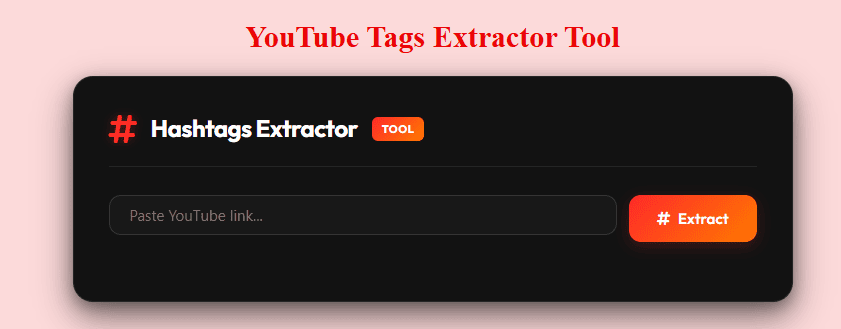
A youtube tag extract method parses public HTML source code from any online video page to instantly display the hidden metadata tags assigned by the creator. You paste the link into a reliable youtube tag extractor online utility to inspect target indexing terms. If you wonder how to extract tags from youtube video URL in seconds, this process exposes long-tail keywords, regional spellings, and categorization tactics without manual code searching.
What Is a youtube tag extract Tool?
A youtube tag extract utility is a specialized web tool or script designed to scan public video web pages and pull out concealed background metadata stored in internal code. YouTube stores these keywords inside background HTML, tucked into JavaScript variables like keywords.
Standard viewers only see titles, descriptions, channel names, and public hashtags. Behind the scenes, internal video tags stay hidden on the normal interface. By running a youtube tag extract query, you skip developer tools and convert that hidden data into readable text. The script finds the video ID, fetches the public document object model from YouTube servers, and pulls out the tag array.
That breakdown shows you exactly how competitors tag their work. When checking top educational channels in India, a youtube tag extract scan often reveals regional spellings and alternative search terms absent from the main title. Having that raw text helps you compare your metadata against established players. More detail here: extract video tags youtube.
Why Use It?
Performing a youtube tag extract search helps creators audit competitor keyword strategies, uncover long-tail search variations, and streamline upload workflows without guessing search algorithm preferences. Instead of trusting third-party generators that guess search volume, pulling live tags shows what successful channels actually type into YouTube Studio.
Analyzing competitor metadata gives you a clear baseline to build a video search metadata outline based on real publishing data. Run a youtube tag extract check on top-ranking videos in your niche, and patterns stand out fast. You’ll see which keyword combinations keep landing solid search positions.
This approach works wonders for multi-lingual audiences. Indian viewers routinely mix English and Hindi in a single search bar. A youtube tag extract lookup reveals whether leading creators use transliterated phrases or native script tags. Relying on actual competitor entries means you won’t miss regional phrasing that drives real traffic.
Why Use It?
Integrating a youtube tag extract routine into your daily content workflow delivers major operational benefits, including faster research, clear competitor tracking, and better long-tail keyword coverage. You avoid right-clicking pages and digging through thousands of lines of source code. An automated parser gives you clean data in under two seconds.
Here are the core practical benefits of adding this workflow to your upload process:
- Instant Keyword Identification: Reveal exact target tags without opening browser developer console logs or reading raw HTML output.
- Competitor Strategy Benchmarking: See how established channels categorize their videos to capture YouTube search traffic.
- Regional Phrasing Discovery: Identify localized spellings and regional terms used by successful Indian creators across tech, finance, and educational niches.
- Character Limit Efficiency: Copy clean tag sets into your dashboard while staying within YouTube’s strict 500-character limit.
- Data-Backed Content Clustering: Group relevant topics together based on standard tags used by category leaders.
Using a dedicated youtube tag extract process takes guesswork out of metadata creation. You base your tags on actual performance signals from your niche, making content planning much easier.
Key Features
Essential features of a high-performance youtube tag extract tool include rapid server-side parsing, automatic character counting, clean comma formatting, and reliable multi-script character rendering for regional languages. Good tooling keeps your workflow fast and frustration-free. Related read: hidden youtube tags viewer.
First, quality parsers work directly with public URLs without forcing you to install browser extensions or grant invasive channel permissions. Second, a practical youtube tag extract system trims extra spaces, fixes comma placement, and counts characters automatically.
Third, strong multi-script handling is essential. For channels running mixed-language content in India, a youtube tag extract tool must handle Devanagari script, Tamil characters, and Unicode symbols without corrupting text. Clean formatting means you can copy tags straight into YouTube Studio without fixups.
Who Should Use This Tool?
Independent creators, channel managers, digital marketing agencies, and video SEO specialists will benefit directly from using a youtube tag extract system for competitive research. Anyone trying to improve video discovery can use tag analysis to refine indexing strategy.
For solo creators in India scaling channels on low budgets, doing a youtube tag extract check gives you free market research. You don’t need expensive monthly SEO subscriptions to see how top brands tag their uploads. If you want to figure out how to find tags used by top youtube channels, extracting metadata directly gives you the exact blueprint. Agencies handling client accounts can use these tools for quick baseline audits.
Be realistic about what tags can do, though. Running a youtube tag extract search won’t save a video with a bland thumbnail or choppy audio. Meta tags are secondary context clues for search crawlers. If your content fails to hook viewers, tags won’t bridge the gap.
How to Run a youtube tag extract Process
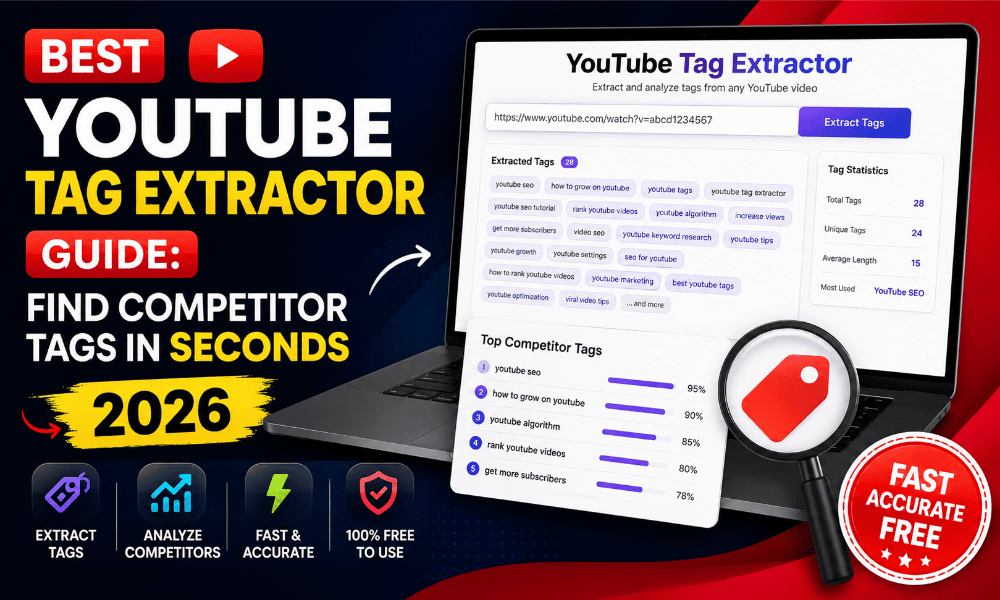
Executing a youtube tag extract task involves copying a public video link, pasting it into the web utility, running the parser, and grabbing the formatted tags for your dashboard. The whole process takes under thirty seconds. If you’re wondering how to inspect competitor youtube tags fast, follow this simple workflow.
Follow these operational steps to perform a successful youtube tag extract task:
- Copy the Target URL: Navigate to YouTube, find the video you want to analyze, and copy its complete web address from your browser address bar or share menu.
- Paste into the Extractor: Open the online youtube tag extract tool interface and paste the link directly into the primary URL input field.
- Execute the Parsing Request: Click the extract button to send a lightweight request that reads the public page metadata.
- Review Extracted Keywords: Examine the generated tag list, paying attention to specific long-tail key phrases, brand names, and misspellings.
- Copy Selected Tags: Click the copy button to store formatted tags in your clipboard, ready for insertion into your own video management dashboard or metadata optimization checklist.
Once copied, filter out non-relevant brand tags from the competitor before publishing your video metadata.
Supported Features / Quality
High-quality youtube tag extract processing relies on server-side scripts that accurately read embedded JavaScript objects and standard HTML meta tags without scrambling regional script characters. Lower-tier scripts often break complex long-tail tags or cut off text.
When picking a youtube tag extract tool, make sure its output meets standard web processing rules like W3C HTML standards. The utility should read hidden <meta> tags and JavaScript objects while preserving original character encoding.
Good extractors handle non-English text effortlessly. If an Indian creator learns how to extract hindi youtube video tags from a review video, the youtube tag extract engine should display Hindi script right alongside English terms. Clean text formatting prevents broken symbols in your final tag box.
Browser-Based vs App-Based
Choosing a browser-based youtube tag extract site over an installed extension comes down to system speed, software security, and avoiding unnecessary background browser extensions. Both methods fetch public metadata, but they handle system resources differently.
Web tools require no installation, work on mobile or desktop, and leave no software residue. You open the page, finish your youtube tag extract lookup, and close the tab. It is ideal if you want to extract youtube video metadata without browser extension overhead or background permission risks. Step-by-step here: youtube metadata extraction.
Extensions put action buttons right inside YouTube’s interface, which is handy if you analyze dozens of clips daily. But extensions constantly run in the background and can drag down browser performance. For most creators, a simple web-based youtube tag extract tool is lighter, safer, and fast enough.
Common Use Cases
Creators run a youtube tag extract check for competitive gap analysis, keyword discovery in crowded niches, and refreshing legacy videos with modern search terms. Knowing how to apply this data keeps you from copying tags blindly.
Competitive gap analysis is the biggest use case. If you’re starting a channel around Indian finance or tech reviews, running a youtube tag extract search on top videos shows standard keyword baselines. You notice industry terms you might have skipped that search algorithms look for.
Updating older videos is another great application. If past uploads lost search traction, executing a youtube tag extract run on current top results reveals updated search phrasing. Refreshing outdated metadata with current search terms can bring impression numbers back up.
Best Practices
Following best practices during a youtube tag extract routine ensures you extract strategic keyword inspiration while filtering out competitor brand handles and misleading metadata. Extracted competitor tags should serve as strategic inspiration, not direct replacements for original content optimization.
Always strip out competitor channel names and personal handles when evaluating a youtube tag extract output. Keeping another creator’s brand name in your tags confuses YouTube’s topic mapping and can trigger policy warnings for misleading metadata. If you want to copy competitor youtube tags within character limit bounds, focus on descriptive phrases and topic keywords. See also: youtube tag copy paste.
Keep your total count under 400 characters, even though YouTube allows 500. Combining core keywords from a youtube tag extract report with your unique topic terms keeps metadata sharp and easy for search crawlers to categorize.
Comparison Table
Comparing methods to run a youtube tag extract process highlights clear trade-offs between processing speed, technical setup requirements, device compatibility, and final text formatting. A standard web utility gives channel managers the best balance of speed and convenience.
The table below compares four common approaches for performing a youtube tag extract workflow:
| Extraction Method | Processing Speed | Setup Required | Device Support | Output Formatting |
|---|---|---|---|---|
| Web-Based youtube tag extract | Under 2 Seconds | None (Instant) | All (Mobile/Desktop) | Clean CSV / Comma List |
| Manual Page Source Inspection | 30–60 Seconds | None (Browser Dev Tools) | Desktop Only | Raw Unformatted JSON |
| Browser Extension Add-on | Instant on Page Load | Extension Install | Desktop Only | Formatted On-Screen Box |
| Full Commercial SEO Suite | 5–10 Seconds | Paid Account Setup | Desktop / App | Integrated Keyword Reports |
Manual inspection costs nothing, but a web-based youtube tag extract tool saves serious time when analyzing multiple competitor links in one sitting.
Is It Safe?
Yes, running a web-based youtube tag extract search is completely safe because it reads standard public source code without requesting channel logins or account passwords. Video tags are public data sent to any browser loading the page.
Since a youtube tag extract tool only requests public web page information, it never touches your Google account credentials. You don’t sign in or grant third-party OAuth permissions to run a query. That keeps your channel secure against login leaks. Full walkthrough here: extract tags from video url.
Running a youtube tag extract search won’t trigger channel strikes or algorithm flags either. You’re just viewing public metadata in a clean layout. As long as you avoid downloading executable files, web extraction carries zero safety risks.
Is It Legal?
Yes, using a youtube tag extract script to view public web metadata is fully legal under standard web data inspection guidelines and fair research practices. Public HTML delivered to your browser is open for inspection by design.
YouTube bans mass automated scraping of site data. But running an individual youtube tag extract search to research metadata fits fair analytical use. You’re examining public context tags meant to help search engines understand content.
Legality comes down to how you use the pulled terms. Studying tag patterns to refine search strategy is standard research. Copying trademarked channel names or misrepresenting another brand in your tags violates guidelines. Use a youtube tag extract tool for market research, then write original metadata for your channel.
Common Mistakes
The biggest mistake creators make after a youtube tag extract query is copying competitor tag sets word-for-word without stripping out irrelevant brand names or personal channel handles. Mindless copy-pasting fills your dashboard with useless terms and competitor names.
Another mistake is overestimating what tags do. After doing a youtube tag extract lookup, some creators completely ignore title and thumbnail quality. According to official Google YouTube API documentation, metadata tags play a minor contextual role compared to main titles and watch time statistics.
Finally, avoid stuffing irrelevant popular keywords into unrelated videos. If your clip covers budget Android phones, pulling laptop keywords just because a top video used them confuses search algorithms and drops your click rate. More detail here: youtube tag parser free.
Pro Tips
Maximizing value from a youtube tag extract report requires cross-referencing extracted terms with search trends, leveraging intentional misspellings, and building structured channel tag libraries. Treating tags as research data helps you build better metadata frameworks.
Here are three practical ways to make the most of your metadata research:
First, check pulled keywords against live trend data on Google Trends. When a report shows twenty tags, grab the top three multi-word phrases and see if search interest in India is rising or falling.
Second, look for common search typos. Mobile keyboard users mistype terms constantly. Adding genuine misspellings to your tag box helps YouTube connect your upload to misspelled searches without cluttering your main title.
Third, build a master spreadsheet. Save top phrases from multiple research sessions into topic columns. When preparing upcoming uploads, pull core tags from your library to keep channel indexing consistent.
Why Choose Our Tool?
Our platform offers rapid web parsing, zero user registration requirements, and pristine multi-language text handling across all desktop and mobile devices. We designed our utility to deliver instant results without paywalls or hidden costs, making it the best free youtube tag extract tool online.
We built this system to handle regional text flawlessly. Whether you process tags in English, Hindi, Devanagari, or other regional scripts common in Indian videos, our tool preserves exact character strings without breaking code. If you wonder how to extract hidden tags from youtube video pages without headaches, our tool handles it effortlessly. Related read: how to extract hidden tags from youtube video.
We also keep your search data private. We don’t log search histories, track channel activity, or require extension installs. You get a lightweight tool that turns video links into clean tag lists in under two seconds.
Conclusion
Using a fast youtube tag extract web utility streamlines your competitive research, exposes target long-tail keywords, and takes the frustration out of metadata planning. While tags remain secondary to strong thumbnails, compelling titles, and high viewer retention, maintaining tight tag relevance ensures search crawlers categorize your video accurately from the moment you hit publish.
Avoid copying competitor tags verbatim or relying on hidden keywords to rescue low-quality videos. Use the data gathered from a youtube tag extract check to build localized, highly relevant keyword arrays tailored to your audience. Paste your next competitor URL into our free competitor keyword research tool today, extract clean metadata instantly, and refine your video SEO strategy with concrete data.
Frequently Asked Questions
-
Does YouTube still use tags for video rankings?
Yes, tags still play a small contextual role in overall video ranking compared to titles, thumbnails, and viewer watch time. YouTube uses tags primarily to clarify search context for ambiguous terms or common misspellings. Extracting competitor tags with a workflow remains useful for identifying long-tail search phrases in your niche.
-
Is using a youtube tag extract tool free?
Yes, basic web-based tag extraction utilities are completely free to use without subscription fees or hidden charges. You simply paste a public video link to retrieve hidden metadata instantly. Our tool provides free extraction without requiring account creation.
-
Can I copy all tags from a competitor’s video directly?
No, copying a competitor’s complete tag set directly is bad practice. You should remove their personal brand handles, channel names, and non-relevant phrases before uploading tags to your channel. Use extracted tags for structural research rather than wholesale copying.
-
How many tags should I add to my YouTube video?
200 to 350 focused characters is optimal, even though YouTube allows up to 500. Quality and relevance matter far more than reaching the absolute character limit. Concentrate on 5 to 10 highly descriptive multi-word keyword phrases.
-
Will extracting tags work on private or unlisted videos?
No, extraction utilities can only parse metadata from publicly accessible YouTube video pages. If a video is set to private, server security prevents external parsing tools from accessing page HTML code. Unlisted videos can only be parsed if you possess the direct link.
-
Can I run a tag extraction on mobile devices?
Yes, web-based extraction tools run smoothly inside mobile browsers on Android and iOS devices. Simply copy the video link from your YouTube mobile app, open the browser tool, and extract tags directly on your phone.
-
What is the difference between YouTube tags and hashtags?
Internal YouTube tags are hidden metadata added in Studio to assist search categorization, whereas hashtags are visible links displayed above your title or description. Both serve discovery purposes, but internal tags accept up to 500 characters while hashtags should be limited to 3 main terms.
-
Why do some videos show zero extracted tags?
Some creators choose not to add custom tags during the upload process, leaving the hidden keyword array empty. If a creator skips tag entry, the extraction tool will accurately report that no tags exist for that video.
-
Does tag extraction work for YouTube Shorts?
Yes, tag extraction works on YouTube Shorts provided the creator manually entered tags during upload. However, YouTube relies even more heavily on short-form visual content signals and titles for Shorts distribution than standard horizontal uploads.
-
Is it possible to view tags manually without a tool?
Yes, you can right-click a public video page on a desktop browser, select View Page Source, and search for the keywords variable array. However, using a dedicated extraction tool automates this tedious task and presents clean formatted text instantly.