Introduction
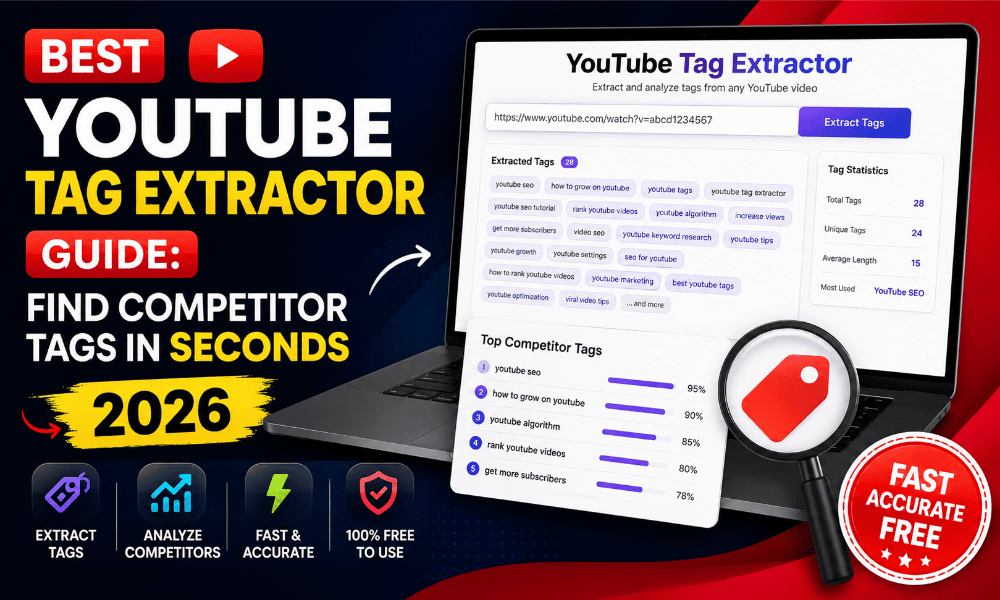
Using a reliable tag extractor youtube tool gives creators instant access to hidden video keywords buried inside a page’s code, showing you exactly how top channels target specific audience searches. YouTube hides these descriptors from normal view on the watch page. But the background script still holds every single word. Extracting them gives you a direct look into how your competitors organize their metadata for better search placement.
Analyzing hidden video tags gives creators a direct look into competitive keyword strategies. Creators across the United States spend way too much time guessing which phrases actually drive traffic in their niche. Finding exact tags takes away the guessing game and shows what people are actually searching for.
Metadata extraction takes the friction out of channel research. Instead of wading through endless lines of web code yourself, dedicated tools parse the data in seconds. This guide covers how extraction tools work, how to use the information ethically, and how to fit keyword research into your regular publishing routine.
Quick Answer
A tag extractor youtube site works by grabbing public URL inputs, scanning the underlying web page code, and returning a full list of target keywords in seconds for easy copying. Just copy a video URL, paste it in the box, and click the button. The system scans the page script and hands you a clean list of comma-separated tags ready to use.
What Is a tag extractor youtube?
A tag extractor youtube script is a web page utility that pulls hidden metadata tags directly out of public HTML source code whenever you need to analyze video keywords. When you upload a video, YouTube Studio asks for descriptive tags to give the system extra context. You won’t see these terms under the video player, but they stay right there inside the page’s backend code.
The tool sends an HTTP request to the URL you provided and scans the response data. It searches specifically for JSON arrays containing keyword strings hidden in the scripts. Once found, it strips out the raw code tags and turns the messy text into a clean list of phrases.
Doing this manually is a headache. Instead of opening browser inspector screens and reading through thousands of code lines, you get readable tag lists right away. Seeing how top channels tag their videos gives you clear insight into how the platform handles discovery.
Why Use It?
Running a tag extractor youtube lookup speeds up market research by replacing manual source code checks with a single button click that surfaces target phrases used by top channels. Looking at successful uploads helps you figure out how top channels blend main keywords, secondary queries, and brand names. That gives you a solid starting point when planning your own videos.
Checking these tags helps you spot gaps in current search results. If three or four top videos use the exact same secondary phrases, you know those terms hold weight with viewers. You can always check official YouTube Creator guidance to learn more about how search systems process metadata alongside viewer watch time.
Extracting metadata bridges the gap between creator assumptions and proven audience search patterns. Stop guessing what sounds good. Base your choices on actual performance data so your titles, descriptions, and backend tags pull in the same direction.
Benefits
Pulling competitor metadata helps creators map out successful video strategies, eliminate manual code hunting, and copy proved keyword structures straight into their upload settings for better search discovery. Automated metadata extraction cuts video keyword research time from thirty minutes down to a few seconds. That time saved lets your team spend more effort on making great videos instead of clicking around source pages.
- Accelerated topic research: Retrieve backend keywords instantly without opening developer tools or source code pages.
- Improved metadata alignment: Match your tags with high-ranking videos in your specific content vertical.
- Clear brand identification: Spot signature keywords and channel tags used by established industry leaders.
- Streamlined workflow: Copy parsed keywords straight into your channel upload defaults or custom planning sheets.
- Enhanced search visibility: Build comprehensive tag sets that reflect actual search terms typed by online viewers.
Using a tag extractor youtube site gives you a front-row view of exact keyword orders. Knowing how successful creators arrange their metadata makes it much easier to fine-tune your own tags for maximum search relevance.
Key Features
Quality metadata extraction tools feature fast URL parsing, one-click clipboard copying, interactive visual tag chips, channel keyword detection, and full browser compatibility without requiring software downloads or browser extensions. Simple layouts mean you do not need any coding background to parse links quickly. Here are the core features you should expect from a decent tool.
- Instant URL parsing: Process standard desktop URLs, shortened mobile links, and short-form video links without errors.
- One-click copy functions: Export extracted keyword lists as comma-separated values directly into your system clipboard.
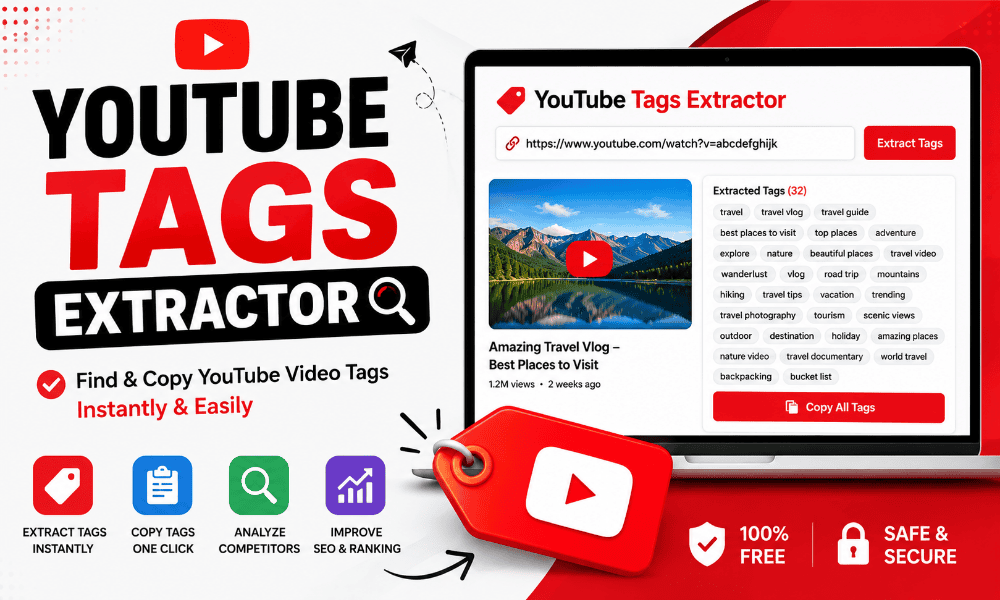
- Visual tag chips: View keywords as individual interactive tags for rapid visual review and individual selection.
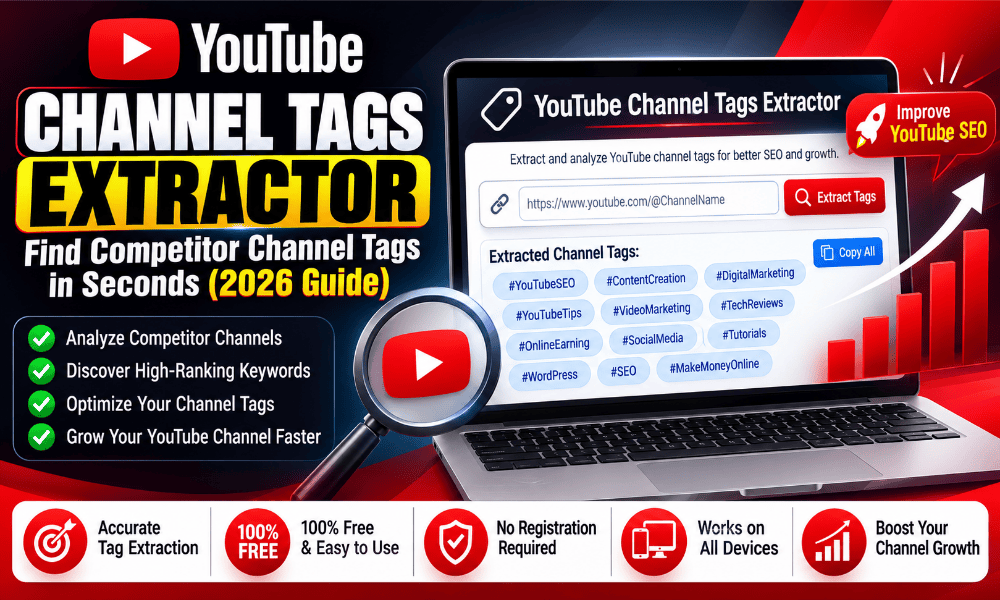
- Channel keyword detection: Extract overall channel-level metadata alongside individual video tags when available.
- No-install operation: Run extraction queries directly inside modern desktop or mobile web browser windows.
Who Should Use This Tool?
Digital content creators, SEO agencies, channel managers, and media researchers use metadata extractors to analyze competitive keyword patterns, improve search positioning, and speed up routine upload workflows. Whether you run a small hobby channel or manage corporate clients, clear metadata data takes the guesswork out of video setup.
- Independent content creators: Creators looking to optimize tag choices and improve video discovery rates.
- Digital marketing agencies: SEO strategists conducting competitive analysis across client industry segments.
- YouTube channel managers: Operations managers overseeing tag hygiene, upload defaults, and channel taxonomies.
- Market researchers: Media analysts gathering keyword trends and topic frequency data across broad niches.
Studying how rival channels set up their uploads helps everyone on your team make better decisions. You can also match your extracted phrases with our youtube SEO guide to build a broader channel strategy.
How to Use It
Extracting hidden tags takes seconds: copy a video link from YouTube, paste it into the tag extractor youtube URL box, hit extract, and review or copy your results. Follow these simple steps to pull backend keywords from any public video on the platform.
- Navigate to YouTube and locate the specific public video you wish to analyze.
- Copy the complete video link from your browser address bar or through the share menu on mobile.
- Open your preferred tag extractor youtube page on your desktop computer or mobile device browser.
- Paste the copied video link into the primary URL input field at the top of the utility page.
- Click the extract button to launch the automated source parsing script.
- Review the extracted tag list displayed on the screen for keyword relevance and search structure.
- Click the copy button to save the tag list to your clipboard for use in YouTube Studio.
After copying the text, open your draft inside YouTube Studio and paste the terms straight into your tag field. Just make sure to drop any channel-specific brand names that don’t apply to your video.
Supported Features / Quality
High-performing extraction tools process standard web URLs, mobile short links, and Shorts links while preserving original numbers, character accents, and capitalization across all global target languages. Good tools won’t drop terms or scramble special characters when processing complex links.
They stick to web standards laid out by the World Wide Web Consortium so raw HTML gets parsed cleanly. That means non-English channels get full, accurate tag sets without missing letters or broken symbols.
Browser-Based vs App-Based
Web-based tools process metadata entirely in the cloud without requiring software downloads or local browser permissions, whereas desktop tools and browser extensions need local installation and frequent code updates. Browser utilities save local storage and dodge annoying security warnings entirely.
Desktop apps or extensions sometimes offer offline caching or bulk features. But extensions demand broad browser permissions and break whenever YouTube alters its frontend code structure. Web tools bypass those headaches by handling everything on remote servers.
For most creators, web tools offer the easiest path forward. You get immediate answers without giving plugins access to your browser data or hogging system memory.
Common Use Cases
Content teams use metadata tools during topic research to find core keywords, during upload preparation to optimize tags, and during channel audits to spot missing search opportunities across existing videos. Getting a clear view of competitor tags solves common strategy problems across every stage of video production.
When brainstorming new topics, checking top-ranking videos helps you map out your core target terms. Looking across five or ten competing videos usually reveals a cluster of recurring search phrases. You can even drop those keywords directly into your video script outline before you start filming.
Agencies rely heavily on extraction tools when taking on new client channels. Reviewing old uploads surfaces missing search terms and bad organization habits quickly. Pair this with our channel audit tool to do a complete health check on any account.
Best Practices for Tag Extractor YouTube Data
Using a tag extractor youtube tool effectively means selecting relevant long-tail phrases that match your actual video topic rather than blindly copying entire tag lists from competing creators. Never copy competitor tag sets blindly without verifying relevance to your specific video content. The algorithm rewards strong relevance, not just high tag counts.
Mix broad category tags with specific long-tail descriptive phrases. Broad terms set the general topic, while long-tail phrases zero in on what your video actually demonstrates. Take a look at Google Search Central for more on how search crawlers interpret contextual page metadata.
Keep your tags clean and stay well under the platform’s character cap. Put your most important keywords right at the beginning of the list, then add secondary terms and brand tags toward the end. Give your tags an occasional checkup using our video metadata tips guide to stay aligned with how people search today.
Comparison Table
Comparing metadata extraction methods reveals clear differences in speed, installation effort, account security, and overall usability for daily creator workflows across different desktop and mobile operating environments. The table below breaks down how popular extraction options stack up.
| Extraction Method | Processing Speed | Setup Requirement | System Security | Best Suited For |
|---|---|---|---|---|
| Web-Based Extractor | 1–3 Seconds | None (Instant) | High (No Install) | Quick Audits & Daily Use |
| Browser Extension | 1 Second | Extension Install | Moderate (Permissions Needed) | High-Volume Power Users |
| Manual HTML Inspection | 30–60 Seconds | Manual Search Skills | High (Native Browser) | One-Off Verification Checks |
| Desktop Software | 2–5 Seconds | Full Application Install | Varies (Local Executable) | Offline Bulk Analysis |
Is It Safe?
Using a web-based tag extractor youtube tool is completely safe because it reads public web page source code without asking for your login credentials or channel access permissions. That means your channel login stays entirely separate from the search process. You never have to grant account permissions or sign in to pull public tags.
Since the script only looks at public HTML data, there is zero risk to your account status. Avoid any tool that asks for channel access passwords or admin permissions just to view public page information.
Is It Legal?
Extracting public HTML source code from indexed YouTube pages is entirely legal in the United States, as tags are non-confidential data accessible to any standard web browser inspecting page markup. Public tags are openly readable in the page code. Checking them is no different from viewing meta tags on any standard website.
That said, using extracted keywords to create deceptive metadata breaks platform policies. The U.S. Copyright Office explains trademark standards clearly, so avoid using another channel’s brand name to siphon off search views. Stick to honest market research and relevant subject terms.
Common Mistakes
Common mistakes when using extracted metadata include copying trademarked channel names, stuffing unrelated trending keywords into uploads, going over character limits, and neglecting video titles and descriptions. Making these mistakes can hurt your search reach or trigger platform policy flags.
- Copying competitor channel names: Adding another creator’s trademarked handle can trigger misleading metadata flags.
- Inserting completely unrelated popular tags: Spamming trending terms lowers audience retention when viewers drop off quickly.
- Exceeding character limits: Pushing past the 500-character limit forces YouTube Studio to reject your tag configuration.
- Neglecting title and description context: Relying on tags alone while leaving titles unoptimized harms overall search indexing.
Pro Tips
Advanced creators maximize metadata performance by cross-referencing extracted tags with live YouTube search auto-complete terms and organizing high-performing keyword combinations into reusable sub-topic templates. Doing this keeps your keyword strategy tied directly to real-time viewer search habits.
First, test your extracted terms inside YouTube’s search bar. When a tag pops up in auto-complete suggestions, you know people are actively typing it. Use those validated phrases in your video tags and even say them out loud during your recording.
Second, organize your best tags into themed spreadsheet lists. Having ready-to-use keyword groups makes uploading future videos in the same series much faster. Review your core tags every few months to adjust for new search trends.
Why Choose Our Tool?
Our web tool provides clean, fast metadata parsing without forced account registration, intrusive ads, or extra software installs, formatting your tags cleanly for instant pasting into YouTube Studio. We keep things fast and simple so you can grab your data and get back to creating.
Our backend formats everything properly, separating phrases with standard commas so you can paste them straight into YouTube Studio. Whether you are on a phone or desktop, the page scales cleanly to fit your screen.
Conclusion
Using a tag extractor youtube process gives you clear insights into competitor metadata strategies, allowing you to refine your keywords and build better publishing habits without wasting time in source code. Looking at real keyword data takes the mystery out of video optimization. Pair good tag choices with strong titles, eye-catching thumbnails, and solid content. Start analyzing competitors in your space today to boost your channel’s search presence.
Frequently Asked Questions
-
What is a video tag on YouTube?
A video tag is a descriptive keyword added to an upload that helps YouTube’s algorithms categorize content and handle search misspellings. Viewers cannot see these keywords on the main watch page.
-
Are YouTube tags still important for ranking?
Yes, YouTube tags still help contextualize videos, especially when handling common search misspellings or regional phrasing, though titles and thumbnails drive main traffic. Keeping accurate tags supports overall search indexing efficiency.
-
How do I see hidden tags on a video?
You can see hidden tags by using an online web extraction tool or by inspecting the page source code in your desktop browser. Online tools speed up this check by surfacing all tags in seconds without manual code searching.
-
Can I use an online tag extractor youtube tool on mobile devices?
Yes, an online tag extractor youtube tool runs directly in mobile web browsers without needing any native app downloads or extra system setups. Just copy the share link from the mobile app and paste it into the web tool. The results show up clearly on phone screens.
-
Will using competitor tags get my channel banned?
No, using relevant competitor tags will not get your channel banned, provided you avoid copying trademarked brand handles or adding misleading keywords. Always stick to terms that accurately describe what happens in your video.
-
How many tags can I add to a YouTube video?
500 total characters is the maximum limit enforced by YouTube across all combined tags in a single upload. That budget includes spaces and commas between words. Most creators stay between 15 and 25 targeted terms.
-
What is the difference between video tags and channel tags?
Video tags describe the specific topic of a single upload, while channel tags define the broader niche and overarching theme of your entire YouTube account. Both help recommendation systems place your videos in front of the right audience.
-
Does YouTube charge money to view video tags?
No, YouTube does not charge anything to view video tags, as page source code and public metadata are completely free to access. Web tools simply organize that free data into readable text. You never need to pay to check video tags.
-
Can I extract tags from private or unlisted videos?
No, you cannot extract tags from private videos because access is restricted, though unlisted videos work if you have the direct link. Private uploads remain locked down tight from external tools.
-
How often should I update tags on my YouTube videos?
You should update tags every few months on older, stagnant videos to capture new search trends, but leave currently performing videos alone. Adding modern terms can give quiet uploads a fresh boost. Just leave your top-performing videos as they are to avoid disrupting existing rankings.